01
Spring bias
At rest, a stainless compression spring pushes the bolt outward into the strike. With no input, the latch sits in one state only — closed.
- Component
- compression spring, stainless
- Default state
- bolt extended, pin trapped

Mechanism
Sequential triple-action with auto-reset. Patent-protected mechanism in seven markets.
The problem
Standard latches were never designed to outwit a curious horse, a nudging cow, or the vibration of a trailer at 70 mph. Animals open them. Vibrations loosen them. Accidents happen.
The "animal-proof" latches that do exist tend to require two hands and a fight every time you want through a gate. They frustrate humans long before they stop the animals.
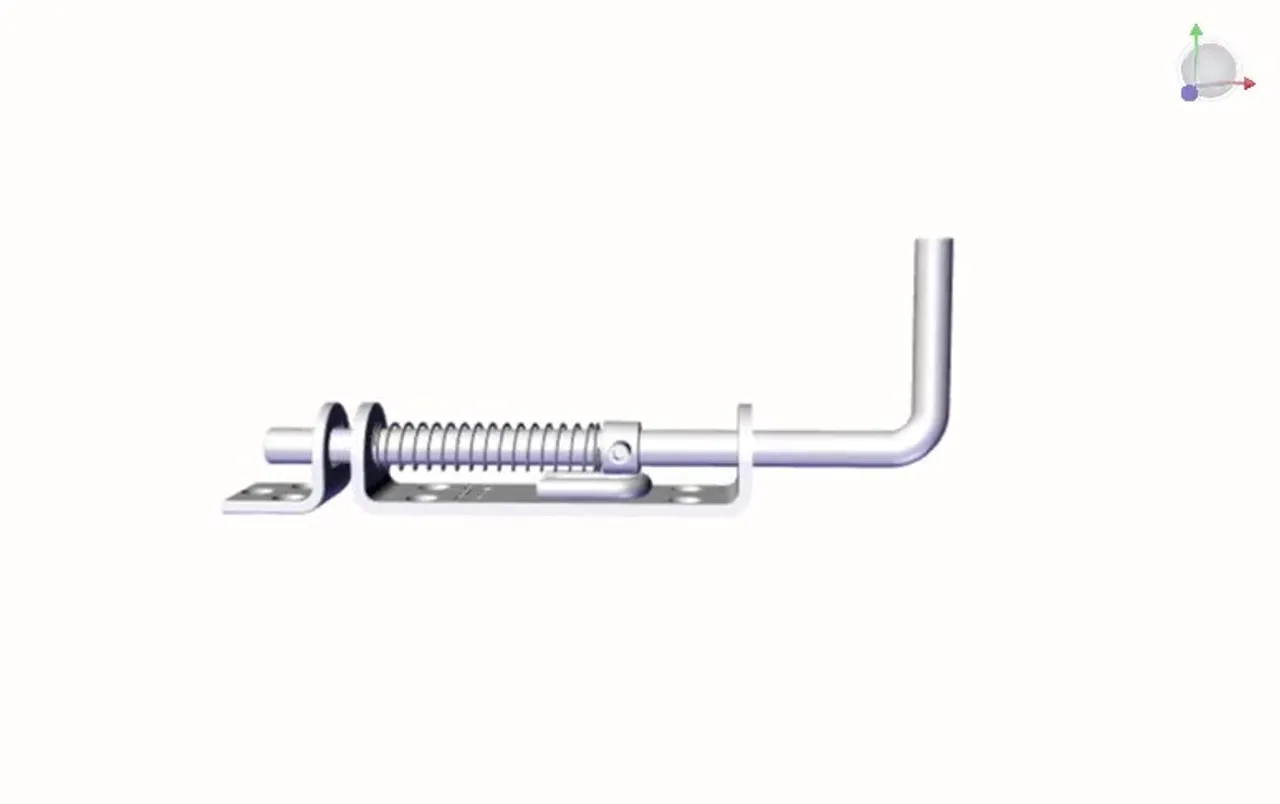
[CONFIRM: replace with hi-res 3D render]
The triple action
Every opening — and every closing — runs the same three actions: PUSH, ROTATE, OPEN. Skip the middle one and the spring drives the bolt straight home.
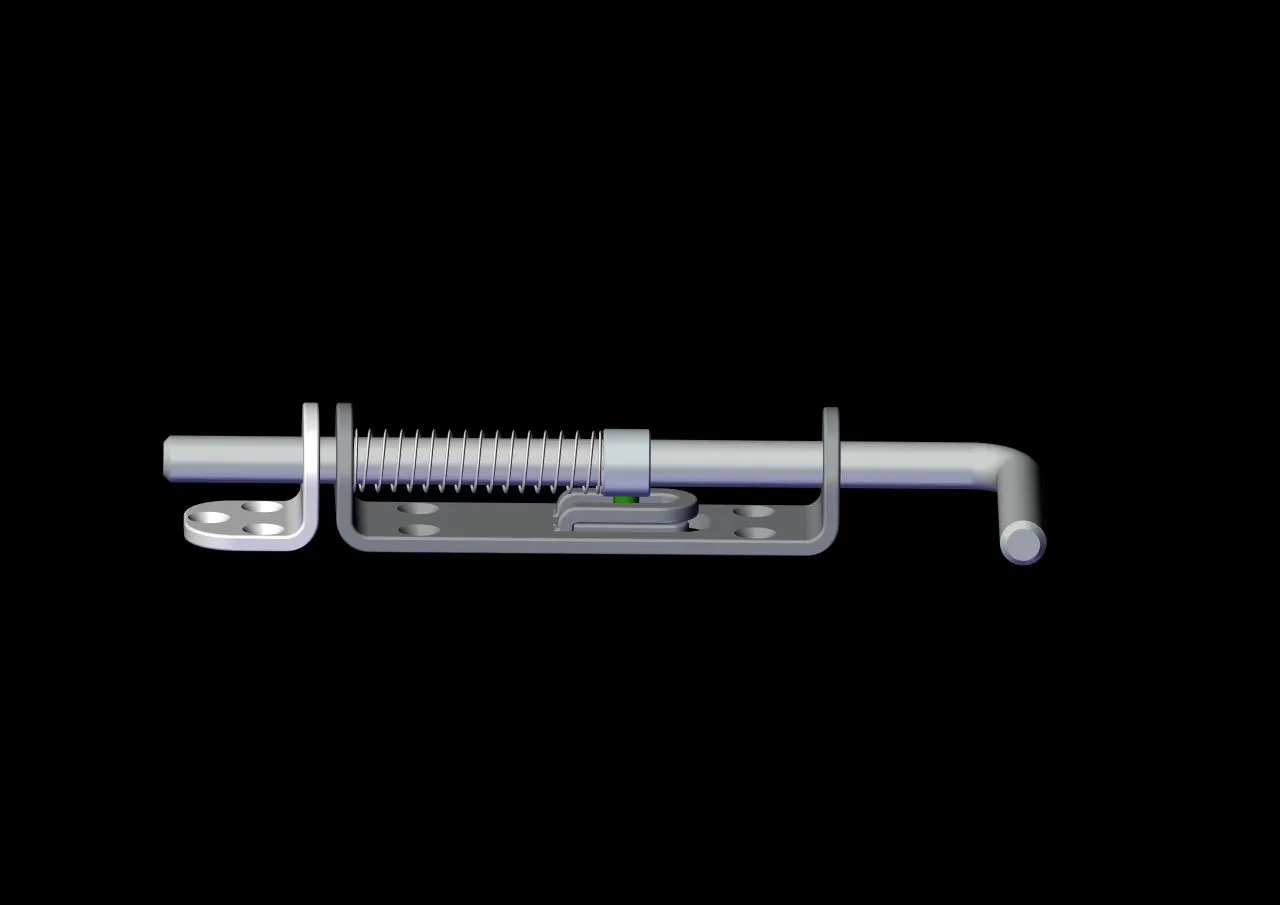
ACTION 01
PUSH
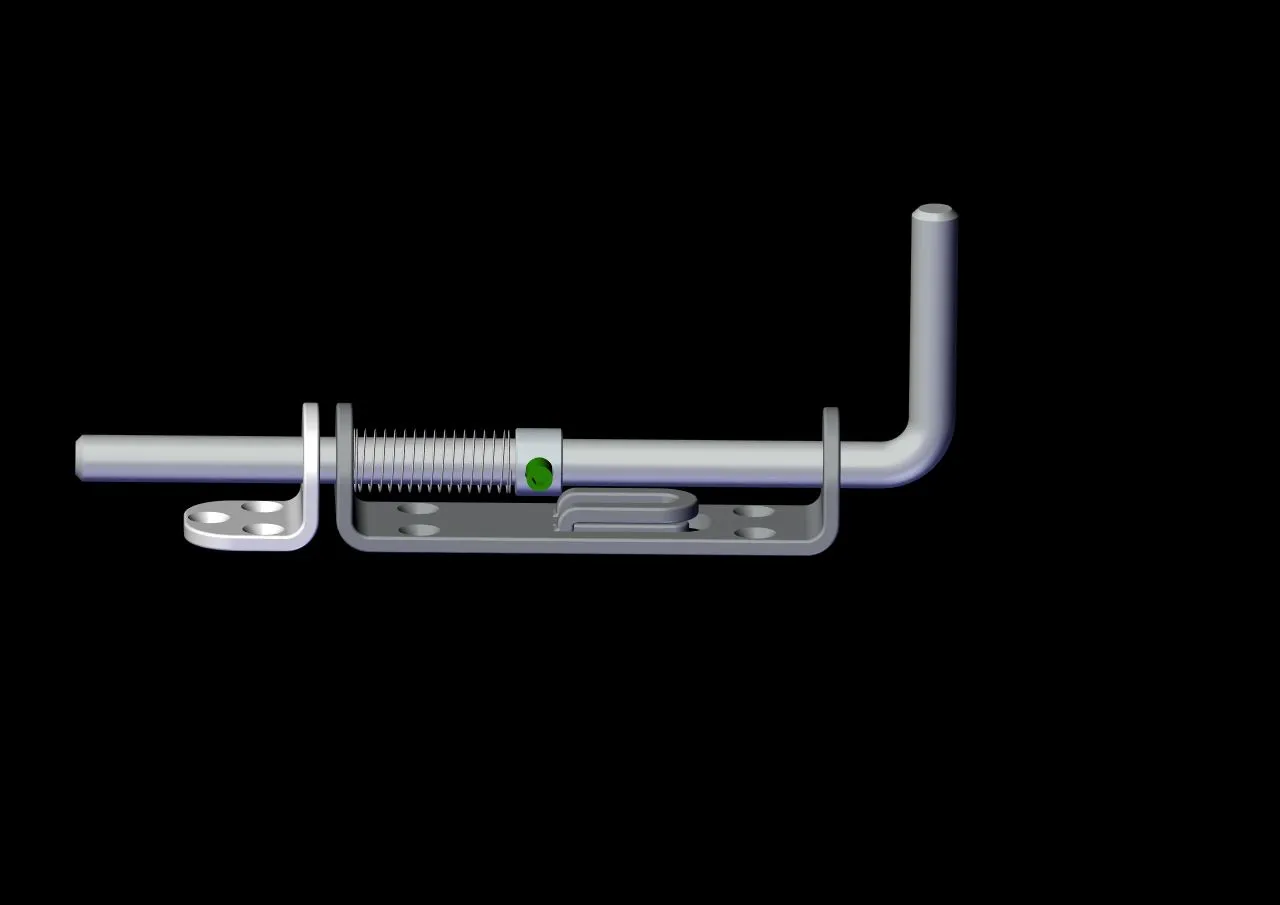 GATE
GATE ACTION 02
ROTATE
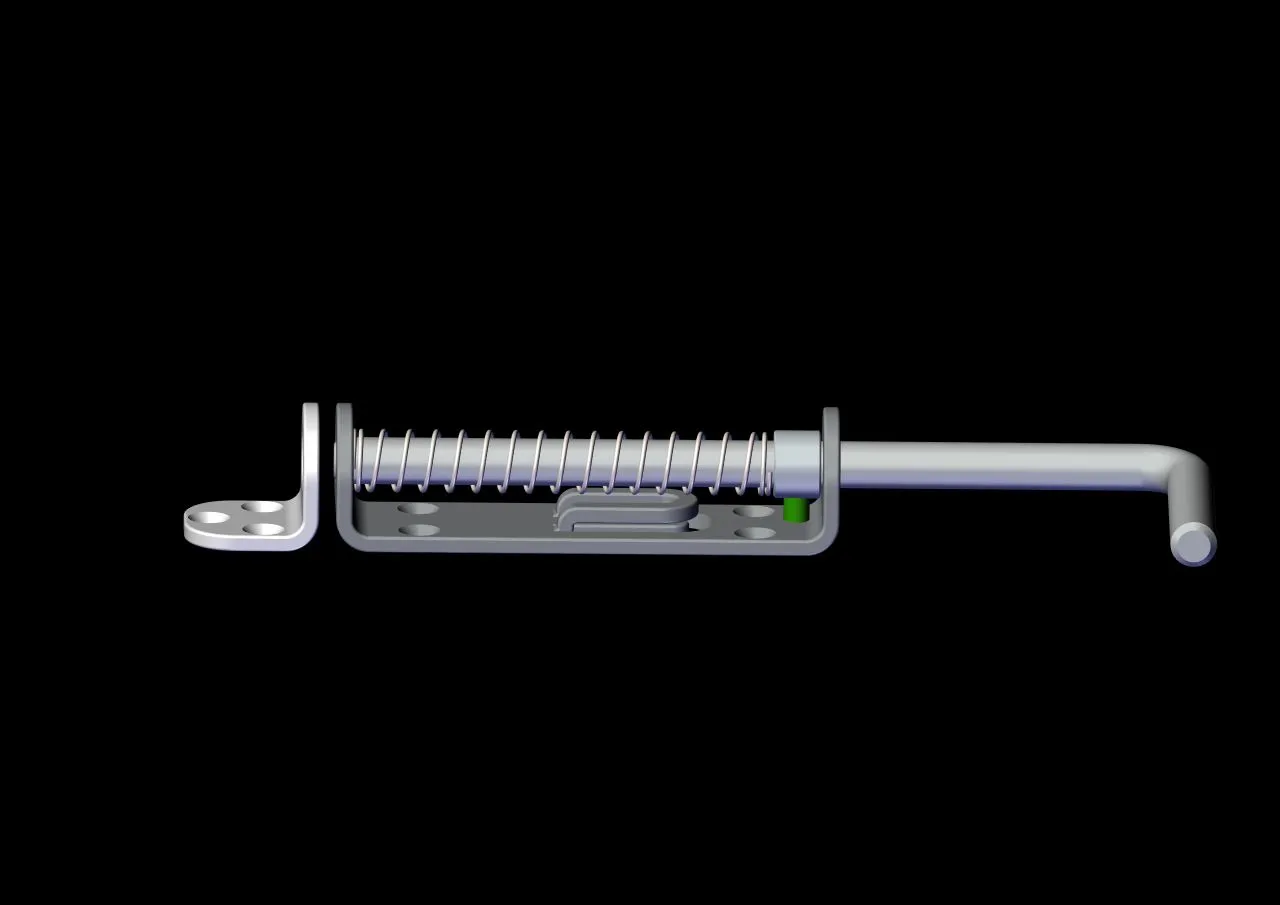
ACTION 03
OPEN / CLOSE
NO ROTATION
RESET
spring drives bolt
back to locked
Human hand
open · PUSH → ROTATE → OPEN
close · PUSH → ROTATE → CLOSE
Three actions, one motion. The L-handle is the only thing that can hold the push while delivering the rotation. Without that grip, action 02 never happens.
Animal · accident · vibration
reset · PUSH → RESET
A nose, a paw, a leaned shoulder, a bumped object — anything that can push but can't switch grip to twist. The pin gets as far as the gate, finds no rotation, and the spring sends it home. Every time.
The mechanism
Each step is a discrete mechanical event. Complete the sequence with one motion and the gate opens. Interrupt the sequence at any point and the spring returns the pin to its trap.
01
Spring bias
At rest, a stainless compression spring pushes the bolt outward into the strike. With no input, the latch sits in one state only — closed.
02
Trapped pin
The pin sits inside a closed pocket at the end of the channel. Pulling, tugging or biting on the bolt does nothing — the pocket walls block any lateral retraction.
03
The test
Push the bolt in. Now what? With the pin at the release zone, the bolt has to rotate to continue. Only a hand on the L-handle can do that — a mouth, a paw, leaned weight, a bumped object cannot grip and twist. Without rotation, the spring drives the bolt straight back through 02 to 01. The latch never half-stays open.
04
Release zone
On the human path. With a hand twisting the L-handle, the bolt rotates and the pin lifts out of the channel. The bolt is now free to slide and the gate can swing.
05
Open or reset
Every cycle ends here. Whether you finished the sequence and the gate opened, or you stopped halfway and let go, the spring drives the bolt back into the strike and the pin back into the trap. The latch returns to fully locked on its own — no second step, no re-engaging, no thinking about it.
Why it's different
| Feature | Standard latch | "Animal-proof" | BrazLatch |
|---|---|---|---|
| Animal-resistant | No | Yes | Yes |
| One-handed operation | Yes | No | Yes |
| Vibration-resistant | No | Varies | Yes |
| Self-resetting | No | No | Yes |
| Patent-protected mechanism | — | Varies | Yes · US10934749B2 |
Patent details
Sliding Bolt Latch and Use Thereof. Inventor: Alik Alexander Braz.
[CONFIRM: provide patent PDF for download link]
Patent coverage
US10934749B2
Licensed · 2
Open for licensing · 5